England
English is one of the world’s most widely spoken languages. This is partly because it was the language of the British Empire. The empire once controlled so much of the world that it was said that the Sun never set on the British Empire.
England, the birthplace of English, takes up most of the island of Great Britain. It is one of the four lands that form the United Kingdom. The English that people speak there today is quite different from the English that was spoken long ago. If you were to read a book by Geoffrey Chaucer, one of the early writers of English, someone would have to explain to you
what many words mean.
England has produced many famous writers since Chaucer. They include such poets as John Milton and Percy Bysshe Shelley and such novelists as Jane Austen and Charles Dickens. England is also known for its theater. That art has remained important since the time of playwright William Shakespeare some 400 years ago.
England’s Oxford and Cambridge are two of the oldest universities in the world. The country’s contributions to classical and folk music, as well as to rock and roll, are also
important. It’s hard to imagine what rock would be like if there hadn’t been English performers such as the Beatles, the Rolling Stones, and David Bowie.
The English also invented two of the world’s most popular sports: football (known as “soccer” in the United States) and cricket.

England

The St George’s Cross

Red Rose
The official language of England is English, which is spoken today by millions of people all over the world. Many students go to England from other countries to study the language and learn about the culture. Although everyone speaks English, there are many different accents around the country. French was the official language in England between 1066 and 1362, which is why there are many French words and expressions in English such as ‘bon voyage’ for ‘have a good trip’ or ‘bouquet’ for ‘a bunch of flowers’.
English people love music. In the summer you can go to music festivals all over the country like those at Glastonbury, Leeds or Reading. Glastonbury is a five-day festival of music, dance, comedy, theatre and circus and around 175,000 people go. Many people stay at the festivals for a few days and camp in tents. People listen to all types of music, especially pop and rock. England has produced many international groups and singers like the Beatles, Amy Winehouse, Coldplay, Ed Sheeran and Adele.
The most popular sports in England are football, rugby and cricket and most towns have a sports ground where teams can play. English football teams like Manchester United, Chelsea and Liverpool are world-famous and English football players include David Beckham, Wayne Rooney and Harry Kane. Women’s football is also popular and teams play in leagues and competitions all over the country. Every year, the English rugby union team play in the Six Nations Championship against Wales, Scotland, Ireland, France and Italy. Cricket is a traditional sport played with a bat and ball which began in England and is now played all over the world. People like to watch all these sports on television, as well as other sports like horse racing, tennis, snooker (a type of billiards) and motor racing.
England is a very multicultural country and this has a big influence on the food people eat. Indian, Chinese and Italian cuisines are popular alternatives to traditional English food like fish and chips, roast beef or sausage and mash (mashed potatoes). Many English people drink several cups of tea every day, usually with milk. However, coffee and herbal teas are also popular.
The national flag of England is white with a red cross. It is called the St George’s Cross and Saint George is the patron saint of England. St George’s Day is on 23 April, but it’s not a public holiday. The rose is the national flower of England and the lion is the national animal. The lion is a symbol of many English sports teams.


Main Facts | |
|---|---|
Area | 50,334 sq mi (130,365 sq km) |
Size | England is 74 times smaller than the USA, 59 times smaller than Australia and 3 times smaller than Japan |
Population | Approximately 56 million |
Capital City | London |
Major Cities | London – (7,172,036 ); Birmingham – (976,400); Liverpool – (439,476); Manchester, – (392,900) |
Language | English |
Land | The south of England is mostly low-lying land, with hills and agricultural land and the north of England is mostly covered in moorland and mountains |
Highest point | Scafell Pike 3,210 ft (978 m) |
Lowest point | The Fens, 4.6 metres (15 feet) below sea level |
Longest River | Thames (346 km) |
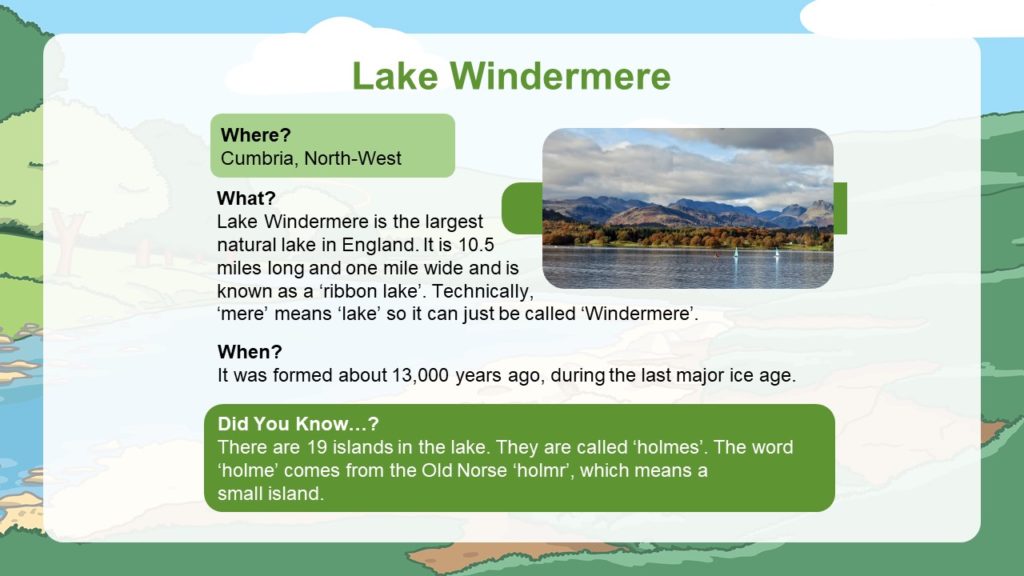
Largest Lake | Windermere 5.69mi² (14.73km²) |
National Day | 23rd April |
Motto | Dieu et mon Droit (French for ‘God and my right’) |
National Bird | Robin |
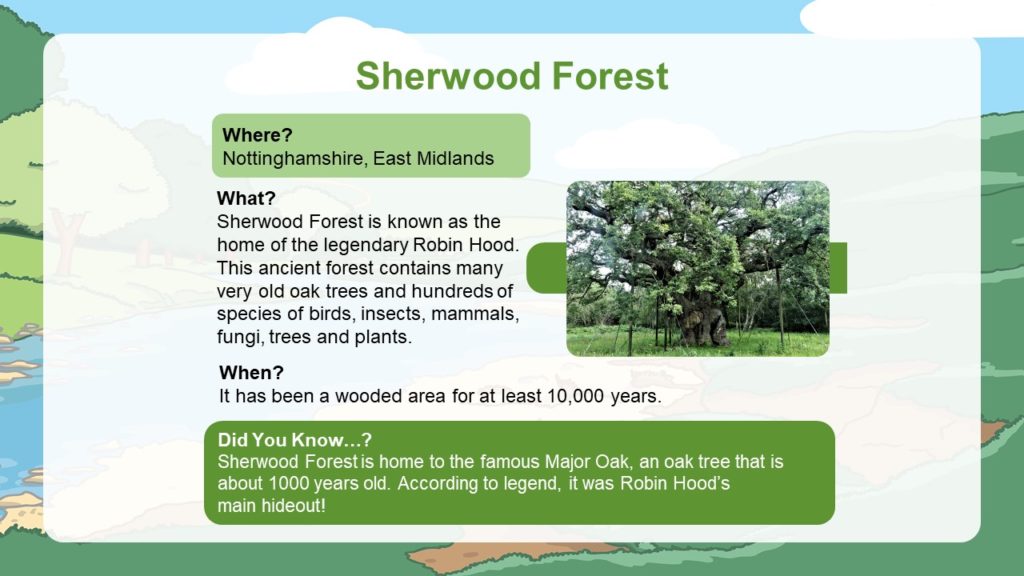
National Tree | Oak |
National Animal | Lion |